EN
EN
 English
 CN
CN
What Is the Price of Resveratrol Powder? 2026 Price List
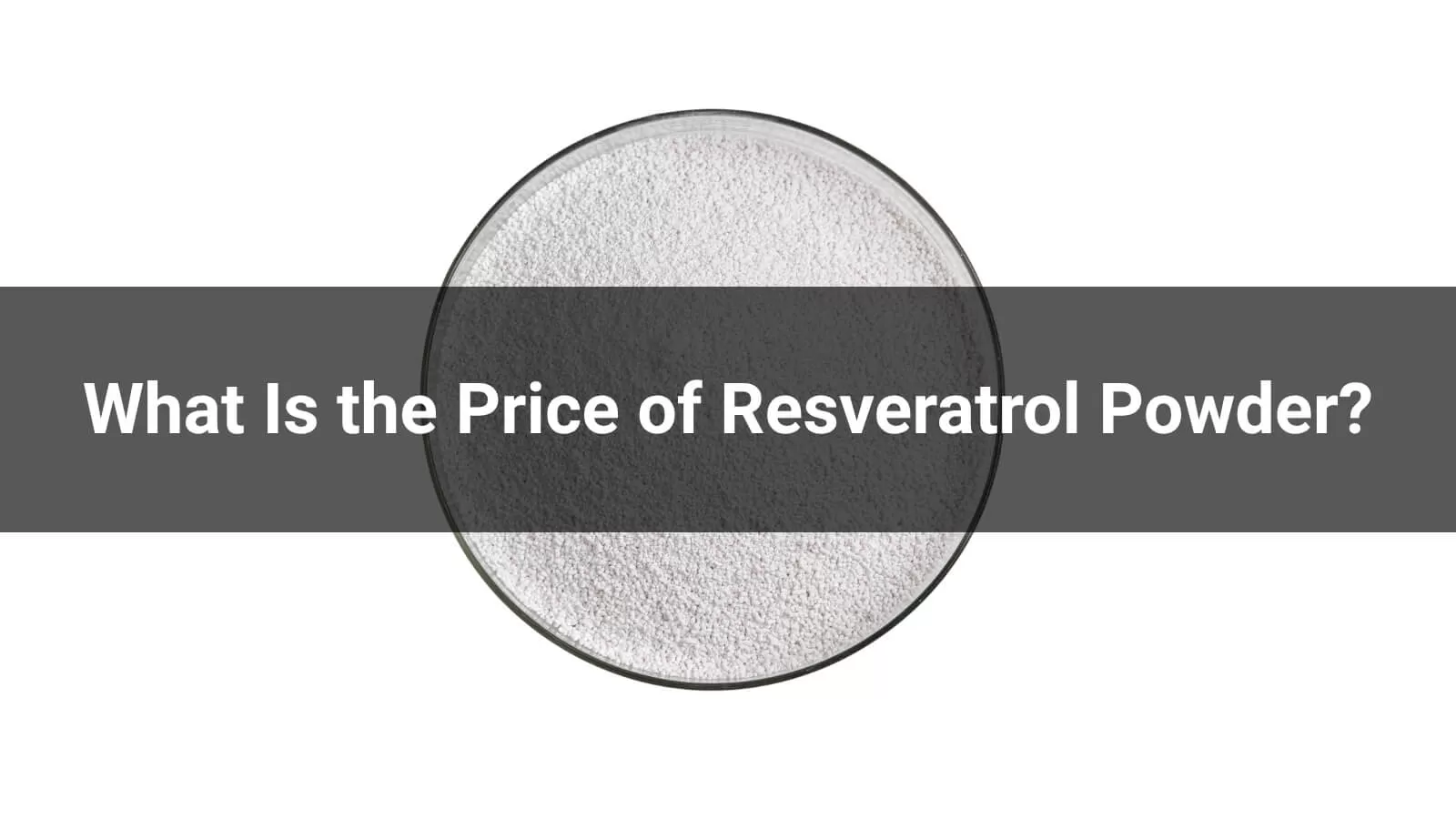
If you're sourcing resveratrol powder in 2026 — whether for a supplement brand, a private label launch, or a new functional product line — you've probably noticed how wildly prices vary from one supplier to the next. One quote says $60 per kilogram. Another says $400. Both claim "98% purity." So what's the real market price, and how do you avoid overpaying — or worse, underpaying for a product that won't pass your QC tests?
This guide cuts through the confusion. Below, you'll find the 2026 resveratrol powder price list, a clear breakdown of what drives those price differences, and practical sourcing tips to help you secure the best value from a trusted manufacturer.
Resveratrol Powder Price List 2026 (At a Glance)
The price of resveratrol powder in 2026 typically ranges from USD $25 to $800 per kilogram, depending on purity, source, and order volume. Below is a quick-reference price list to help buyers benchmark current market rates.
2026 Resveratrol Powder Price Reference Table
| Specification | Purity | Source | Price Range (USD/kg) | Typical MOQ |
| Standard Resveratrol Powder | 50% | Japanese Knotweed | $25 – $80 | 1 kg |
| Standard Resveratrol Powder | 98% | Japanese Knotweed | $50 – $200 | 1 kg |
| Trans-Resveratrol Powder | 98% | Japanese Knotweed | $100 – $400 | 1 kg |
| Trans-Resveratrol Powder | 99% | Japanese Knotweed | $200 – $550 | 1 kg |
| Natural Resveratrol (Grape Extract) | 98% | Grape Skin/Seed | $300 – $800 | 1 kg |
| Biosynthesized Resveratrol | 98%–99% | Microbial Fermentation | $200 – $800 | 1 kg |
Key Takeaways from the 2026 Price List
- Purity is the #1 price driver. Moving from 50% to 98% purity can increase the price by 2–3x, and trans-resveratrol (the bioactive form) commands a further premium.
- Source matters significantly. Grape-derived resveratrol is the most expensive due to lower yields, while Japanese knotweed remains the most cost-effective traditional source.
- Biosynthesized resveratrol — produced via microbial fermentation — is emerging as a competitive, sustainable alternative with stable pricing and consistent purity, making it increasingly attractive for premium supplement brands in 2026.
- Bulk orders unlock major discounts. Buyers ordering 25 kg or more typically secure 15–30% lower per-kg pricing compared to small trial orders.
How Much Does Resveratrol Powder Cost per Kg in 2026?
The per-kilogram cost of resveratrol powder in 2026 depends primarily on three variables: purity grade, order quantity, and supplier type. Understanding how each of these affects the final price helps buyers negotiate smarter and avoid overpaying — or, just as importantly, avoid underpriced products that compromise on quality.
Wholesale vs. Retail Pricing
There's a significant gap between retail and wholesale resveratrol powder prices in 2026. Retail buyers — typically purchasing 100g to 1kg for personal use, R&D, or small-batch formulation — pay a premium for smaller packaging, branding, and distribution markups. Wholesale buyers sourcing directly from manufacturers benefit from economies of scale and substantially lower per-kg costs.
| Specification | Purity | Source | Price Range (USD/kg) | Typical MOQ |
| Standard Resveratrol Powder | 50% | Japanese Knotweed | $30 – $80 | 1 kg |
| Standard Resveratrol Powder | 98% | Japanese Knotweed | $80 – $180 | 1 kg |
| Trans-Resveratrol Powder | 98% | Japanese Knotweed | $150 – $300 | 1 kg |
| Trans-Resveratrol Powder | 99% | Japanese Knotweed | $250 – $450 | 1 kg |
| Natural Resveratrol (Grape Extract) | 98% | Grape Skin/Seed | $400 – $700 | 1 kg |
| Biosynthesized Resveratrol | 98%–99% | Microbial Fermentation | $200 – $500 | 1 kg |
Price by Order Quantity (MOQ Impact)
Order volume is one of the most powerful levers for reducing your per-kg cost. Manufacturers like VDK can offer significantly better rates for larger orders because production, QC, packaging, and logistics costs are spread across more units. As a general rule of thumb:
- 1–5 kg orders: Best for sampling, R&D, or formulation testing — expect to pay near the top of the price range.
- 25–50 kg orders: The "sweet spot" for small-to-mid-sized supplement brands, typically unlocking 15–20% discounts.
- 100 kg and above: Industrial pricing tier, often 25–35% below trial-order rates, with custom packaging and private-label options available.
Trans-Resveratrol vs. Standard Resveratrol Pricing
It's important to distinguish between standard resveratrol and trans-resveratrol when comparing prices. Trans-resveratrol is the biologically active isomer responsible for most of the compound's health benefits, and it commands a higher price due to more demanding extraction and purification processes. In 2026, trans-resveratrol 98% typically costs 40–80% more than standard resveratrol 98% from the same source.
For supplement manufacturers targeting health-conscious consumers, the higher cost of trans-resveratrol is usually justified by stronger label claims, better bioavailability, and premium positioning in the marketplace.
Why Some "Cheap" Resveratrol Powder Should Raise Red Flags
Buyers occasionally encounter resveratrol powder offers far below market rates — sometimes as low as $20/kg for "98% purity." These prices are almost always too good to be true. Common issues with extremely low-priced resveratrol include:
- Inflated purity claims not backed by third-party COA testing
- Adulteration with cheaper fillers or related compounds
- Lack of GMP certification or proper quality control
- Outdated stock approaching expiration
Sourcing from a verified manufacturer with full traceability — like VDK, which operates a fully integrated production system from strain development to large-scale fermentation — eliminates these risks and ensures consistent quality batch after batch.
Key Factors That Influence Resveratrol Powder Price
Why does resveratrol powder pricing vary so dramatically across suppliers and product specifications? Understanding the underlying cost drivers helps buyers evaluate quotes more effectively and identify where they can save without sacrificing quality. Below are the six most important factors shaping resveratrol powder prices in 2026.
1. Purity and Extraction Method
Purity is the single largest determinant of resveratrol powder price. Higher purity grades require more advanced extraction, separation, and purification technology — each step adding to production cost.
- 50% purity is typically produced through basic solvent extraction and is the most affordable option, suitable for cosmetic applications or as a raw input for further refinement.
- 98% purity requires multiple rounds of crystallization and chromatography, significantly increasing labor, energy, and equipment costs.
- 99%+ trans-resveratrol demands the most rigorous purification, often using HPLC-grade processing, and represents the premium tier.
Manufacturers using advanced biosynthesis technology — such as microbial fermentation — can often achieve high purity levels with greater consistency and lower environmental impact than traditional plant extraction.
2. Raw Material Source
The botanical or biological source of resveratrol has a major impact on cost:
- Japanese Knotweed (Polygonum cuspidatum): The most common and cost-effective source, accounting for the majority of global supply.
- Grape Skin and Seed Extract: Significantly more expensive due to lower resveratrol concentration per kilogram of raw material, but valued for "natural" and "wine-derived" marketing claims.
- Microbial Fermentation (Biosynthesized): A rapidly growing alternative that bypasses agricultural variability, offering stable supply, traceable origin, and consistent purity — ideal for brands prioritizing sustainability and quality control.
3. Certifications and Compliance
Certified resveratrol powder costs more than uncertified equivalents — but the premium is well worth it for supplement brands that need to meet regulatory and consumer expectations. Common certifications that influence price include:
- GMP (Good Manufacturing Practice)
- ISO 9001 / ISO 22000
- HACCP
- Kosher and Halal
- Organic certifications (where applicable)
- NSF, FDA registration, and EU compliance documentation
Each certification adds to compliance, audit, and documentation costs but provides critical assurance for buyers selling into regulated markets like the US, EU, Japan, and Australia.
4. Order Quantity and MOQ
As covered in the previous section, larger orders consistently unlock better per-kg pricing. Beyond simple volume discounts, bulk buyers also gain access to:
- Custom packaging and labeling
- Priority production scheduling
- Dedicated technical support
- Long-term supply agreements with locked-in pricing
5. Supplier Type: Manufacturer vs. Trader
Where you buy from matters as much as what you buy. The supply chain typically includes three tiers:
- Direct manufacturers (like VDK) offer the lowest prices, full traceability, and the ability to customize specifications. Buyers communicate directly with technical and production teams.
- Distributors add a markup of 10–25% but may offer faster regional delivery and smaller MOQs.
- Trading companies can be convenient but often add 20–40% to the manufacturer's price, with limited transparency about the original source.
For serious buyers, sourcing directly from a vertically integrated manufacturer is almost always the best long-term strategy — both for cost and for quality consistency.
6. Global Supply Chain and Market Demand
Macro-level factors also play a role in resveratrol powder pricing in 2026:
- Raw material harvest cycles affect plant-extracted resveratrol availability and seasonal pricing.
- Energy and logistics costs influence production and shipping expenses globally.
- Consumer demand trends — particularly the continued growth of the longevity and healthy-aging supplement category — keep upward pressure on premium-grade resveratrol.
- Regulatory shifts in major markets (US, EU, China) can affect compliance costs and import pricing.
- Currency fluctuations between USD, EUR, RMB, and other currencies can shift quoted prices by 3–8% within a single quarter.
Buyers who track these factors — or work with manufacturers who do — are better positioned to time purchases strategically and lock in favorable contracts.
Where to Buy Resveratrol Powder at the Best Price
Getting the best price on resveratrol powder means finding a supplier that balances cost, quality, and reliability — not just chasing the lowest quote.
Choose a Direct Manufacturer
Suppliers fall into three tiers, each with a different price impact:
- Direct manufacturers offer the lowest prices, full traceability, and customization. Best for serious, long-term buyers.
- Distributors add a 10–25% markup but allow smaller orders and faster regional delivery.
- Trading companies add 20–40% with limited transparency — generally the least cost-effective option.
For most buyers, sourcing directly from a vertically integrated manufacturer is the smartest long-term choice.
What to Look for in a Reliable Supplier
- Vertical integration — full control from raw material to finished product
- Quality certifications — GMP, ISO, HACCP, Kosher, Halal
- Third-party COA for every batch
- Stable production capacity and consistent lead times
- Responsive technical and sales support
Frequently Asked Questions (FAQ)
1. What is the average price of 98% resveratrol powder in 2026?
The wholesale price of 98% resveratrol powder in 2026 typically ranges from $80 to $180 per kilogram, while trans-resveratrol 98% costs $150 to $300 per kilogram.
2. What is the typical MOQ for wholesale resveratrol powder orders?
Most manufacturers set an MOQ of 1 kg for trial orders and 25 kg or more for wholesale pricing. Orders of 100 kg+ unlock the best per-kg rates.
3. How can I verify the quality of resveratrol powder before buying?
Always request a third-party Certificate of Analysis (COA) verifying purity, heavy metals, and microbial limits, along with GMP and ISO certifications from the manufacturer.
Conclusion: Getting the Best Value for Your Resveratrol Powder Purchase
Resveratrol powder pricing in 2026 is shaped by purity, source, order volume, and supplier type. The smartest sourcing strategy is to match specifications to your end-use, buy in the right volume, and prioritize verified quality over the lowest quote — because the best value always combines competitive pricing with consistent supply and full traceability.
As a vertically integrated manufacturer with advanced biosynthesis technology, GMP-compliant facilities, and a strong R&D foundation, VDK is well-positioned to support buyers seeking dependable resveratrol powder sourcing in 2026 and beyond.