EN
EN
 English
 CN
CN
Astaxanthin or Canthaxanthin: How to Choose the Right Carotenoid?
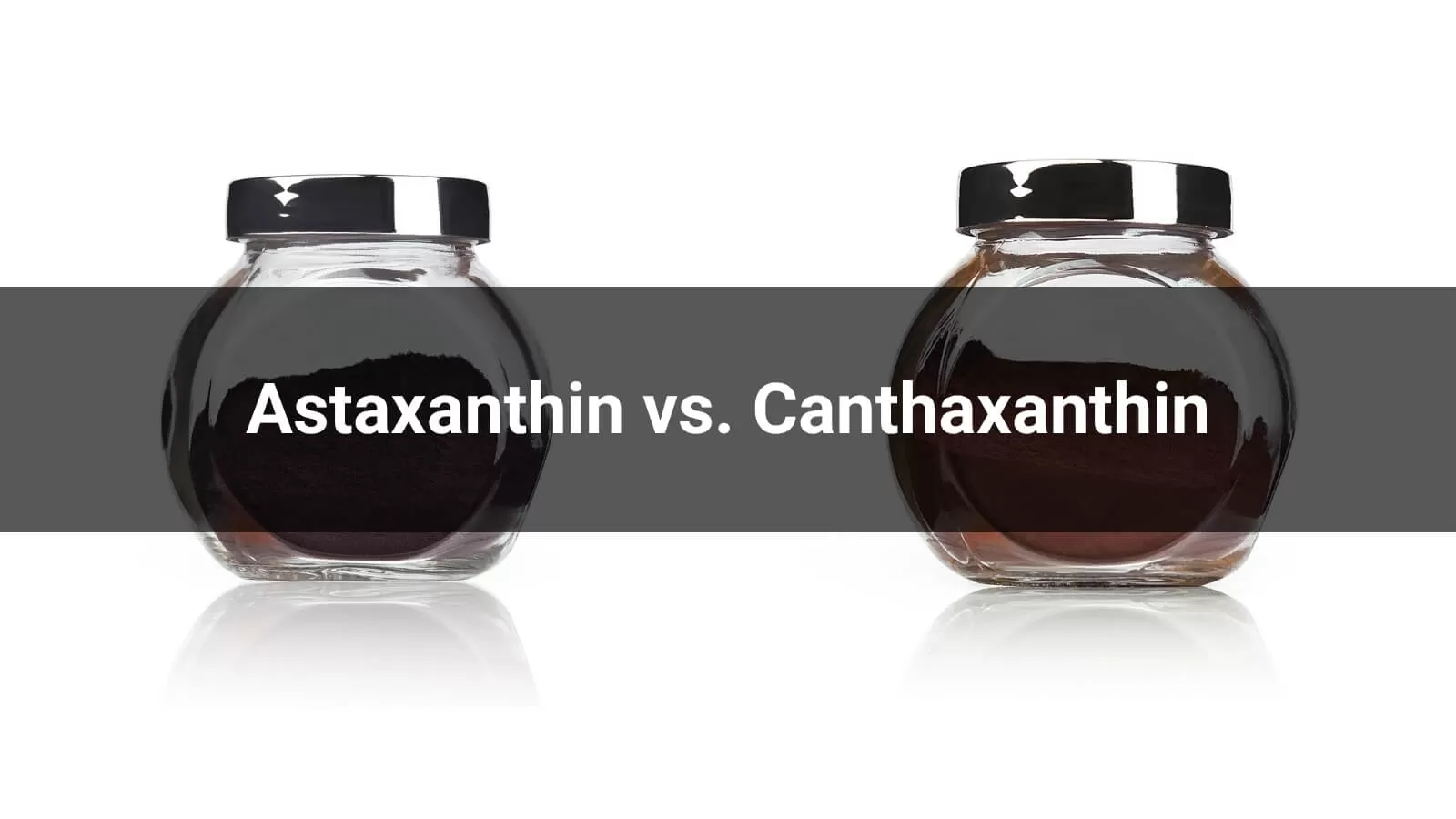
Not all carotenoids are created equal — and for formulators, feed producers, and supplement brand owners, choosing between astaxanthin and canthaxanthin is a decision with real consequences for product performance, regulatory compliance, and market positioning.
Both are orange-red pigments. Both are widely used across food, feed, and health industries. But their antioxidant profiles, approved applications, bioavailability characteristics, and regulatory status differ in ways that make one clearly superior to the other depending on your specific formulation goals.
This guide cuts through the confusion. Whether you are sourcing ingredients for a premium supplement line, optimizing pigmentation in aquafeed, or evaluating carotenoid options for poultry production, you will find a clear, evidence-based framework here to make the right call — and avoid costly sourcing mistakes.
Astaxanthin vs. Canthaxanthin: Differences Overview
| Property | Astaxanthin | Canthaxanthin |
| Chemical Class | Xanthophyll (oxygenated carotenoid) | Xanthophyll (keto-carotenoid) |
| Primary Sources | Microalgae (H. pluvialis), biosynthesis | Biosynthesis, fungi (C. elegans) |
| Color | Orange-red | Orange to red |
| Antioxidant Activity | Extremely high (unique molecular structure) | Moderate |
| Key Applications | Supplements, aquaculture, cosmetics | Feed pigmentation, food coloring, supplements |
| FDA Status | GRAS / approved as feed additive | Approved as feed additive; restricted in human food |
| Bioavailability | High (especially in oleoresin or ester form) | Moderate |
| Market Price | Higher | Lower |
Astaxanthin vs. Canthaxanthin: Antioxidant Activity
Antioxidant potency is one of the most critical differentiators between these two carotenoids — and astaxanthin wins by a significant margin.
Why Astaxanthin Is a Superior Antioxidant
Astaxanthin's exceptional antioxidant capacity comes down to its unique molecular structure. Unlike most carotenoids, astaxanthin has hydroxyl and keto groups at both ends of its molecule, allowing it to span the entire cell membrane and neutralize free radicals on both the interior and exterior simultaneously. This "transmembrane" antioxidant mechanism is unique among carotenoids.
Comparative research consistently places astaxanthin far ahead of other antioxidants:
| Antioxidant | Relative Potency vs. Astaxanthin |
| Astaxanthin | 1× (baseline) |
| Lutein | ~0.5× |
| β-Carotene | ~0.1× |
| Vitamin E (α-tocopherol) | ~0.02× |
| Vitamin C | ~0.006× |
This makes astaxanthin the preferred choice for applications targeting oxidative stress, inflammation, sports recovery, skin health, and cognitive function.
Canthaxanthin's Antioxidant Role
Canthaxanthin does possess antioxidant properties — it contains keto groups that contribute to free radical scavenging — but it lacks the hydroxyl groups at both ends of the molecule that give astaxanthin its superior potency. As a result, canthaxanthin's antioxidant activity is moderate and is generally not the primary reason it is selected for a formulation.
In practice, canthaxanthin is chosen predominantly for its pigmentation performance rather than its antioxidant benefits.
Key Takeaway
If antioxidant efficacy is a core claim in your product — supplements, nutricosmetics, sports nutrition, or eye health formulas — astaxanthin is the scientifically supported choice. Canthaxanthin should not be positioned as an antioxidant-first ingredient.
Astaxanthin vs. Canthaxanthin: Color Profile and Pigmentation Effect
For applications where color delivery is the primary objective — aquaculture, poultry feed, or food coloring — understanding how each carotenoid performs as a pigment is essential.
Color Characteristics
Both astaxanthin and canthaxanthin produce orange-to-red hues, but they differ in shade, intensity, and deposition behavior:
| Property | Astaxanthin | Canthaxanthin |
| Hue | Pink-orange to deep red | Orange to brick-red |
| Color Intensity | High | High |
| Flesh Deposition (Salmon) | Excellent — pink-red muscle tone | Moderate — more orange-yellow tone |
| Skin/Egg Yolk Pigmentation | Strong pink-red | Strong orange-yellow |
| Stability Under Heat | Moderate | Good |
| Stability Under Light | Moderate (requires protection) | Moderate (requires protection) |
Aquaculture: Why Astaxanthin Dominates
In salmon and trout farming, flesh color is a direct purchase driver for consumers. Astaxanthin produces the characteristic pink-red muscle tone that consumers associate with premium, wild-caught fish. It is the industry standard pigment for salmonid aquaculture precisely because its deposition profile closely mimics what fish accumulate naturally in the wild through krill and microalgae consumption.
Canthaxanthin was historically used in salmon feed as a lower-cost alternative, but regulatory restrictions in several markets — particularly in the EU — have capped its inclusion levels due to human health concerns at high doses. As a result, astaxanthin has largely displaced canthaxanthin in premium aquaculture formulations.
Poultry and Egg Production
Here, canthaxanthin has a clear advantage. Its orange-yellow pigmentation profile is precisely what is desired for:
- Deep orange egg yolk coloration
- Golden broiler skin tone
Canthaxanthin is highly efficient at depositing in egg yolks and poultry skin, and its color profile matches consumer expectations in these categories better than astaxanthin. It remains the preferred carotenoid pigment in poultry feed globally.
Key Takeaway
For salmonid aquaculture, astaxanthin delivers superior, market-preferred pink-red flesh color. For poultry and egg yolk pigmentation, canthaxanthin's orange-yellow profile is the more cost-effective and functionally appropriate choice.
Astaxanthin vs. Canthaxanthin: Bioavailability and Stability
For B2B formulators, bioavailability and stability are not just scientific metrics — they directly impact product efficacy claims, shelf life, packaging requirements, and ultimately, customer satisfaction.
Bioavailability Comparison
Bioavailability refers to the proportion of an ingested compound that is absorbed and available for use in the body. Both carotenoids are lipophilic (fat-soluble), meaning they require dietary fat for optimal absorption — but their bioavailability profiles differ in important ways.
| Factor | Astaxanthin | Canthaxanthin |
| Solubility | Lipophilic | Lipophilic |
| Optimal Delivery Form | Oleoresin, oil suspension, softgel | Oil suspension, beadlet, softgel |
| Absorption Enhancement | Significantly improved with lipid co-administration | Improved with lipid co-administration |
| Esterified vs. Free Form | Ester form (natural) shows good bioavailability; free form absorbs faster | Exists primarily in free form |
| Tissue Deposition | Broad — muscle, skin, eye, brain | Primarily liver, skin, adipose tissue |
| Blood-Brain Barrier Penetration | Yes — clinically documented | Limited evidence |
Astaxanthin in oleoresin form — the form produced by VDK using biosynthesis — offers particularly strong bioavailability because the natural lipid matrix of the oleoresin acts as a built-in carrier, facilitating absorption without requiring additional formulation steps.
Stability Considerations
Both carotenoids are susceptible to degradation from heat, light, and oxidation — a critical concern for manufacturers managing shelf life and production processes.
| Stability Factor | Astaxanthin | Canthaxanthin |
| Heat Sensitivity | Moderate — protect during processing | Good — relatively heat-stable |
| Light Sensitivity | High — requires opaque or UV-blocking packaging | High — requires light protection |
| Oxidation Risk | High — antioxidant activity makes it self-sacrificing | Moderate |
| Recommended Packaging | Nitrogen-flushed, opaque, airtight | Opaque, airtight |
| Shelf Life (typical) | 12–24 months with proper storage | 18–24 months with proper storage |
| Encapsulation Benefit | Significant — microencapsulation extends stability markedly | Moderate benefit |
Formulation Implications for B2B Buyers
For astaxanthin:
- Always pair with a lipid carrier (olive oil, MCT oil) in softgel or liquid formats
- Microencapsulation or beadlet technology is strongly recommended for powder blends
- Avoid prolonged exposure to heat during manufacturing (e.g., extrusion processes)
- Specify nitrogen-flushed packaging when ordering bulk oleoresin
For canthaxanthin:
- Beadlet form offers the best combination of stability and dispersibility in feed applications
- More forgiving in high-temperature pelleting processes used in animal feed manufacturing
- Still requires light-protective packaging for finished products
Key Takeaway
Astaxanthin demands more careful formulation and packaging investment, but delivers broader tissue distribution and superior bioavailability — particularly in oleoresin form. Canthaxanthin is more processing-friendly, making it better suited for high-temperature feed manufacturing environments.
Astaxanthin vs. Canthaxanthin: Regulatory Status (FDA, EFSA)
Regulatory compliance is a non-negotiable factor in ingredient selection — especially for manufacturers supplying multiple markets. Astaxanthin and canthaxanthin have meaningfully different regulatory profiles across major jurisdictions, and misunderstanding these distinctions can result in product rejections, reformulations, or market access issues.
United States (FDA)
| Application | Astaxanthin | Canthaxanthin |
| Dietary Supplements | Permitted (NDI / GRAS pathway) | Not approved as dietary supplement ingredient |
| Human Food Coloring | Limited approvals (salmon feed coloring carries over) | Approved for limited use (max 30 mg/kg in specific foods) |
| Aquaculture Feed | Approved (21 CFR 73.35) | Approved (21 CFR 73.75) |
| Poultry Feed | Approved | Approved |
| GRAS Status | Yes — multiple GRAS notices accepted | No general GRAS status for human food |
A critical point for supplement manufacturers targeting the US market: canthaxanthin is not approved as a dietary supplement ingredient by the FDA. Astaxanthin, by contrast, has a well-established regulatory pathway and multiple accepted GRAS notices, making it the only viable option for human supplement formulations in the US.
European Union (EFSA)
| Application | Astaxanthin | Canthaxanthin |
| Food Supplements | Permitted (up to 8 mg/day per EFSA guidance) | Not approved for food supplements |
| Food Colorant (E number) | Not assigned a standalone E number | E161g — approved as food colorant at restricted levels |
| Aquaculture Feed | Approved | Approved with inclusion limits |
| Poultry Feed | Approved | Approved with inclusion limits |
| Novel Food Status | Synthetic astaxanthin requires Novel Food authorization | Governed under feed and food colorant regulations |
The EU presents a nuanced picture. Canthaxanthin holds an E number (E161g) as a food colorant, giving it a defined legal status in food applications — but its use in human dietary supplements is not permitted. EFSA has also historically scrutinized canthaxanthin at high doses due to concerns around crystal deposits in the retina (canthaxanthin retinopathy), which has led to strict inclusion caps in feed applications.
China (NMPA / GB Standards)
| Application | Astaxanthin | Canthaxanthin |
| Health Food / Supplements | Approved as functional ingredient | Limited — primarily feed use |
| Feed Additive | Approved | Approved |
| Food Additive | Approved for limited applications | Approved for limited applications |
For manufacturers based in China — or supplying Chinese brands — astaxanthin has stronger regulatory standing in the health food and dietary supplement channel, aligning with the growing domestic nutraceutical market.
Key Takeaway
If your product is destined for the human dietary supplement market in the US, EU, or China, astaxanthin is the only compliant choice. Canthaxanthin remains a well-regulated and effective option for feed and food coloring applications, but formulators must carefully verify inclusion limits for each target market.
Astaxanthin vs. Canthaxanthin: Industry Applications
Astaxanthin and canthaxanthin serve distinct markets, and understanding where each excels helps formulators and procurement teams make faster, more confident sourcing decisions.
Dietary Supplements
Astaxanthin dominates the human supplement category. Its clinically supported benefits span eye health, skin aging, sports recovery, cardiovascular support, and cognitive function — making it one of the most versatile active ingredients in nutraceuticals today. Canthaxanthin has no meaningful role here: it is not approved as a dietary supplement ingredient by the FDA or EFSA, and at high doses it carries documented safety concerns. For any supplement destined for the US, EU, or Chinese market, astaxanthin is the only compliant and commercially viable choice.
Aquaculture & Salmonid Feed
In salmon and trout farming, astaxanthin is the industry standard. It delivers the pink-red flesh color that consumers associate with premium, wild-caught fish — a direct purchase driver at retail. Beyond pigmentation, astaxanthin also supports fish immune function, reproductive performance, and stress resistance, adding value well beyond color alone. Canthaxanthin was historically used as a lower-cost alternative in salmonid feed, but regulatory restrictions in the EU and shifting buyer preferences have seen it largely displaced by astaxanthin in premium aquaculture operations.
Poultry Feed & Egg Production
This is canthaxanthin's strongest commercial territory. Its orange-yellow pigmentation profile is precisely what poultry producers need to achieve the deep egg yolk color and golden broiler skin tone that consumers in most global markets prefer. Canthaxanthin deposits efficiently in target tissues, is cost-effective at required inclusion rates, and is broadly approved for feed use worldwide. Astaxanthin is not suited for this application — its pink-red hue does not match market expectations for poultry products.
Food & Beverage Coloring
Canthaxanthin holds an official E number (E161g) in the EU, giving it a defined legal framework for use as a food colorant in beverages, dairy, and select other categories. Astaxanthin has more limited approvals as a standalone food colorant, though its "natural" positioning resonates strongly with clean-label product development trends. Formulators targeting food coloring applications should verify canthaxanthin inclusion limits carefully, as caps vary by food category and jurisdiction.
Cosmetics & Topical Applications
Astaxanthin is rapidly expanding in premium skincare, particularly in Asian markets where anti-aging, skin brightening, and UV protection are top consumer priorities. Its antioxidant potency translates directly into credible topical and ingestible beauty claims, and it can be positioned across both nutricosmetic supplements and topical formulations. Canthaxanthin has no meaningful evidence base in cosmetic applications and is not a relevant ingredient in this category.
Conclusion
Astaxanthin and canthaxanthin are both valuable carotenoids — but they serve distinct purposes and are not interchangeable.
Astaxanthin is the preferred choice for human dietary supplements, premium aquaculture, and cosmetic applications. Its superior antioxidant potency, broad regulatory approval, and growing clinical evidence base make it the most versatile and future-proof carotenoid for high-value formulations.
For both ingredients, biosynthesized sources offer the most consistent quality and reliable supply. VDK produces both astaxanthin and canthaxanthin via precision fermentation, and our technical team is available to support your formulation decisions with samples, COA documentation, and application-specific guidance.